- Home
- CV Writing
- Resume Writing
- LinkedIn Profile Writing
- Interview Coaching
- Career Coaching
- Corporate Services
- Partner Program
- News & Videos
- About
- Contact
Send us your details using the form below and we'll call you back as soon as possible.


Engineer CV writing service
We are recommended by professional bodies such as the Society of Operations Engineers, and have been guest speakers for ICE, CIHT and CIEH, so you can rest assured that we are experts when working with engineering professionals.
Why use our engineering CV service?
Over here at The CV & Interview Advisors, we specialise in providing world-class CV writing services for all levels of engineering professionals. This includes job seekers ranging from entry level up to C-suite executives. We are particularly strong working with senior clients ranging from qualified professionals to senior executives.
Clients who use our engineering CV writing services typically get interviews and job offers for better jobs that pay a higher salary. In fact, CV writing services are proven to make you 38% more likely to be contacted by recruiters, 31% more likely to land an interview and 40% more likely to land a job.
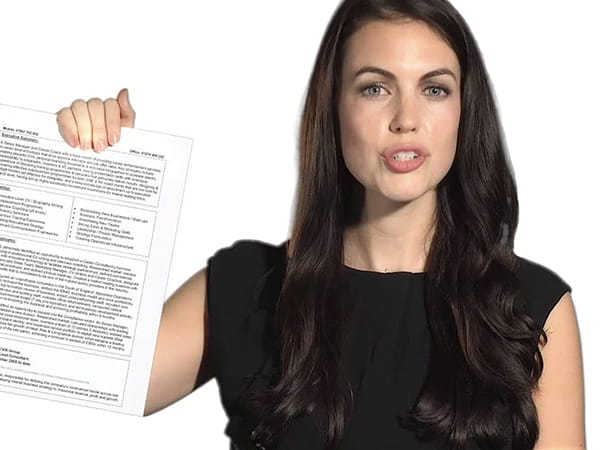
Professionally written, tailored CV writing service
Our CV writers have years of experience in creating high impact CVs for technical professions, such as:
Mechanical engineers
Electrical engineers
Operational engineers
Civil engineers
Telecoms engineers
Quantifying success within a technical field is a challenge but this is where our experience can help. Due to the technical nature of engineering, we have specific expert CV writers and consultants with extensive experience in this field.
Become 40% more likely to win your next Engineering role
CV Writing Service for Engineers
Aimed at professionals with 10 years or more work experience up to senior executive level, our service is of the highest quality and industry leading. You will work with a Personal Branding Specialist who themselves have been senior in their own career and who have extensive experience working with senior job seekers
To write an effective CV we need to find out about you, which requires a detailed exchange of information. This is done through an in-depth two-hour fact-finding / discovery session (via telephone or Zoom) with one of our highly-experienced Personal Branding Specialists / CV Writers. This session is not just a simple Q&A, it’s our opportunity to clarify your personal brand, define your value proposition, and to talk about your track record and achievements.
How the CV service works:
You will have a 2 hour telephone / Zoom fact finding session
We will discuss your career in detail
We will define your personal brand and value proposition
We will write your CV from scratch
We will transform it into a powerful business case
We will keep working until you are 100% happy
CV & LinkedIn Profile Writing Service for Engineers
Our service is of the highest quality and industry leading. This service includes "3 STAR" case studies that can be used to showcase your biggest achievements on your CV and your LinkedIn profile content. To write an effective CV & LinkedIn profile we need to find out about you, which requires a detailed exchange of information. This is done through an in-depth two-hour fact-finding / discovery session (via telephone or Zoom) with one of our highly-experienced Personal Branding Specialists / CV Writers. This session is not just a simple Q&A, it’s our opportunity to clarify your personal brand, define your value proposition, and to talk about your track record and achievements.
How the CV and LinkedIn service works:
You will have a 2 hour telephone / Zoom fact finding session
We will discuss your career in detail
We will define your personal brand and value proposition
We will write your CV and LinkedIn profile from scratch
We will transform both into a powerful business case
We will keep working until you are 100% happy
CV & LinkedIn Profile Writing with Extra Content to Target Multiple Roles
Our service is of the highest quality and industry leading. This service includes extra profiles (the opening paragraph on your CV) and extra case studies (a key sales tool used on CVs) that can be swapped in and out of your CV, depending on the role you are applying for, to make it laser targeted. To write an effective CV & LinkedIn profile we need to find out about you, which requires a detailed exchange of information. This is done through an in-depth two-hour fact-finding / discovery session (via telephone or Zoom) with one of our highly-experienced Personal Branding Specialists / CV Writers. This session is not just a simple Q&A, it’s our opportunity to clarify your personal brand, define your value proposition, and to talk about your track record and achievements.
How the CV and LinkedIn service works:
You will have a 2 hour telephone / Zoom fact finding session
We will discuss your career in detail
We will define your personal brand and value proposition
We will write your CV and LinkedIn profile from scratch
We will transform both into a powerful business case
We will keep working until you are 100% happy
Scientific and proven formula to impress employers in the engineering sector
Our professional CV writing services are not only tried and tested but we're the only CV writing company in the UK with accredited writers. We also operate internationally, helping people in 63 countries last year.
Order our CV services and we'll spend time getting a thorough understanding of your previous projects and job experience in your industry (construction, oil & gas, civil engineering, international development etc). This exchange of information happens during a 2-hour, detailed 1-2-1 fact-finding session. We will then build a brand new CV that's proven to get you in front of key recruitment decision makers.
When you choose a CV package with us, we optimise your personal branding document (your CV) using a number of market-leading, and advanced techniques including:
Applicant tracking system (ATS) optimisation
Social proofing
Value proposition development
Information architecture optimisation
Case studies and storytelling

We have worked with professional bodies such as:
Institute of Chartered Engineers (ICE)
Society of Operational Engineers (SOE)
Chartered Institute of Highways & Transportation (CIHT)
Chartered Institute of Environmental Health (CIEH)
Institute of Healthcare Engineering and Estate Management (IHEEM)
Our Engineering clients have had successful applications with Dyson, Rolls Royce, Honeywell and Siemens.
A dedicated CV writer, just for you
You will work with an accredited career professional with extensive experience in helping people in the engineering sector.
This ensures that you are working with a CV writer that understands the technical nature of your job and who knows the hot skills within your market.
For our engineering customers, we would recommend the Professional CV Package because this best suits your needs and the complexity of the sector you work in.
To order one of our services, select a package below or for more information about our credentials, please contact us on 0203 327 7561 or [email protected].
Frequently Asked Questions
For Junior or Early-Career Engineering Roles:
A two-page CV is usually the best length. This gives you enough space to highlight your technical skills, education, and any relevant projects or placements without overwhelming the reader.
For Mid to Senior-Level Engineering Positions:
A CV of up to three pages is entirely acceptable. At this stage, you’ll likely want to showcase a broader range of experience such as leadership on major projects, technical expertise, and sector-specific achievements.
For Engineering Contractors or Interim Professionals:
If you work on short-term contracts or project-based assignments, your CV may need to extend to four pages. This allows you to detail the breadth of your projects, technologies used, and the outcomes delivered.
Consider the Market You’re Targeting:
Expectations differ internationally. In the UK, three-page CVs are common for engineers, whereas in the US a shorter, two-page resume is often preferred. Always tailor your document to align with the market.
No. Avoid adding a list of references or using the phrase “references available upon request” on your engineering CV. These approaches are outdated, take up valuable space, and rarely influence hiring decisions.
A stronger option is to create a “Recommendations” section towards the end of your CV. This immediately provides social proof and demonstrates your credibility in the industry.
Here’s how to apply this effectively:
Add a dedicated “Recommendations” section at the end of your CV.
Choose two concise quotes from your LinkedIn recommendations (or professional testimonials), ideally from managers, clients, or colleagues who can comment on your engineering skills, project delivery, or technical expertise.
Select recommendations with impact. Focus on those that highlight specific engineering achievements. Avoid vague comments like “hard-working and reliable.”
Present them professionally. Format each quote clearly, and list the recommender’s full name and job title beneath it.
This approach transforms testimonials into a competitive advantage, showing evidence of your engineering capabilities and making a stronger impression than a simple list of references.
The way you present your qualifications depends on your level of experience and the stage of your career.
Where to Place Your Qualifications Section
Early-Career Engineers: If you have a year or less of professional experience, your qualifications will be one of your strongest selling points. Place them near the top of your CV, directly beneath your personal profile.
Experienced Engineers: Once you’ve built a solid work history, your employment record takes priority. Move your qualifications section towards the end of your CV, but still reference key qualifications (such as your degree or chartership) in your opening profile.
How to Format Different Types of Qualifications
University Education: List the degree title, classification (if strong), and the university name.
Example: MEng (Hons) in Mechanical Engineering (2:1), University of LeedsSchool Education (A-Levels, etc.): You don’t need to include your school’s name unless it carries significant recognition. Just list the qualification type, subjects, and grades.
Example: 3 A-Levels: Maths (A), Physics (A), Chemistry (B)Professional & Engineering Qualifications: For sector-specific credentials (e.g. CEng, IEng, or training such as PRINCE2, Six Sigma, or NEBOSH), simply state the qualification itself. The training provider does not need to be listed.
Example: Chartered Engineer (CEng), Institution of Civil Engineers
Example: PRINCE2 Practitioner
A Key Rule: Leave Out the Dates
To reduce the risk of age discrimination, avoid including the dates you achieved your qualifications. This applies to degrees, school-level education, and professional certifications.
To keep your engineering CV clear and impactful, provide detailed descriptions for only your most recent four roles. This ensures recruiters focus on your most relevant and up-to-date experience, rather than being distracted by less significant earlier positions.
How to Present Earlier Roles
For roles prior to your last four, create a section at the end of your work history titled “Earlier Career.” In this section, list your older positions as concise one-liners, including only:
The dates of employment
The company name
Your job title
Do not add responsibilities or achievements for these positions.
Why This Approach Works
This format ensures your CV stays concise and within the standard length of up to three pages for permanent engineering applications. It also highlights the career progression that matters most, while still demonstrating a full employment record.
The strongest engineering CVs are hyper-targeted to the specific role you’re applying for and showcase measurable achievements alongside technical expertise.
Start with a Compelling Profile
Open with a clear profile paragraph that aligns you directly with the job title, whether that’s Mechanical Engineer, Electrical Design Engineer, or Civil Project Manager. Use this section to highlight your relevance and communicate your overall value proposition to the employer.
Highlight Your Core Strengths
Add 3–4 strength statements that reflect the job description, such as project delivery, design and analysis, health and safety compliance, or leadership of technical teams.
Include a Key Skills Section
Lay this out in two columns and tailor it with engineering-specific keywords drawn from the job ad. For example, CAD design, FEA, Lean Six Sigma, PLC programming, or structural analysis.
Showcase Achievements
Include a dedicated section for your career highlights, ideally using STAR-format case studies. These might demonstrate reducing costs, improving efficiency, solving technical challenges, or delivering projects ahead of schedule.
Detail Your Career History
Present your last 10 years in reverse chronological order. For each role, go beyond duties and highlight tangible achievements, such as successful design implementations, process improvements, or large-scale project completions.
Finish with Education and Professional Qualifications
List your academic qualifications and professional credentials, such as CEng or IEng status, Institution memberships (e.g. ICE, IMechE, IET), and relevant training. You can also include optional extras like published work, patents, or NED positions.
Never exaggerate or lie
It may be tempting to overstate your technical experience or qualifications, but if you’re hired and cannot deliver, you risk being dismissed. A short and unsuccessful job stint on your CV can harm future applications. Always highlight your strengths truthfully.Avoid unnecessary personal interests
Including hobbies such as combat sports may give the wrong impression in a professional engineering context. Unless your interests clearly add value or show something unique and positive (e.g. raising funds for charity through a challenge), it’s safer to leave them out.Don’t list bland or generic hobbies
Activities like “listening to music” or “walking” add little value. They don’t distinguish you from other applicants and take up space better used for skills and achievements.Eliminate spelling and grammar mistakes
Engineering roles often demand precision, technical accuracy, and strict attention to detail. Typos or grammar errors can make you appear careless. Always proofread, use tools such as Grammarly, and, if possible, ask a colleague to review your CV before submission.
Here are three of the most common pitfalls that may be stopping you from landing engineering interviews:
Not tailoring your CV to the role
Your CV must be laser-focused on the specific engineering position you are applying for. This means your profile paragraph should align with the job title, your value proposition should reflect the type of projects or engineering outcomes the employer is seeking, and your skills should mirror the requirements in the advert. You should then back this up with project examples and measurable achievements. Yet many applicants still send generic CVs that force recruiters to guess at their suitability.Failing to show achievements
A long list of responsibilities isn’t enough. Employers want proof of impact. Did you reduce costs, improve efficiency, ensure compliance, or deliver a project ahead of schedule? Recruiters want evidence that you achieved results, not just that you were present in the role. Without this, your CV reads as a history of duties rather than a strong case for why you should be hired.Putting in minimal effort
Too many candidates rush their CV without considering the audience. They write for themselves, not for recruiters. A strong engineering CV should demonstrate clarity, precision, and alignment with the expectations of the hiring manager. For senior engineers, this often means two to three pages, depending on the market. Given the competition, a rushed CV usually leads to poor results.
Bonus tip: Proofread carefully
Engineering is detail-driven, and errors can make you look careless. Around 80% of CVs contain typos. Always proofread, use tools like Grammarly, and ask someone else to review your CV before applying.
In short, no — at least not on its own.
While AI tools may seem like a quick solution, most hiring professionals now view them as a red flag. A recent survey of 625 US hiring managers found that 53% were less likely to hire someone who used AI in their application. In fact, 80% dislike AI-generated CVs or cover letters, and 74% believe they can tell when AI has been used.
Some employers, including Big Four consultancies and FTSE 100 firms, have reportedly banned AI-written applications for certain roles, particularly at graduate level. Detection software is also being adopted by recruiters, making it increasingly risky.
The issue is that AI-generated CVs often mimic job descriptions without adding substance. They may look polished, but they typically recycle generic statements and lack real-world engineering achievements. Even if they capture the right keywords, they fail to demonstrate value.
Recruiters are already voicing frustration about receiving hundreds of near-identical applications that are clearly produced by AI.
The only way to stand out is with a CV built around meaningful project examples, measurable results, and sector-specific achievements. Our approach focuses on real engineering experience, strategic targeting, and proven outcomes.
One client, for example, had been struggling to secure interviews with an AI-written CV. After switching to our tailored method, he landed an interview with his very first application.
A strong engineering CV should follow a clear and professional format that demonstrates your technical expertise, achievements, and value to employers. Here’s a best-practice layout:
Contact details
Start with your name at the top, followed by your email address and phone number.Profile or summary
A short paragraph (no more than 8–9 lines) outlining who you are, your value proposition, and around three strengths directly aligned to the role - for example, project delivery, design expertise, or technical leadership.Key skills
Use two columns with 6–8 tailored skills in each, drawn directly from the job description. For engineers, these might include CAD design, structural analysis, Lean Six Sigma, health & safety compliance, or project management.Career highlights
Feature three major achievements on the front page using the STAR method (Situation, Task, Action, Result). Examples could include reducing costs, leading complex design projects, or delivering innovative solutions that improved performance.Career history or professional experience
Begin this section at the bottom of page one. Detail your four most recent roles with job title, employer, dates, responsibilities, and key achievements.Earlier career
Summarise positions older than 8–10 years in an “Earlier Career” section, listing only job title, employer, and dates.Education and professional qualifications
List your academic qualifications along with any relevant certifications, such as CEng/IEng status, PRINCE2, or NEBOSH.Additional details
This may include languages, driving licences, specialist software proficiency, or availability.Recommendations
Instead of “references available on request”, include a couple of short recommendations or LinkedIn testimonials that reinforce your credibility and achievements.
Optional extras
If relevant, you can add sections for published work, patents, voluntary experience, public speaking, or NED roles. If your career path is non-linear or you’re changing specialism, a short “Career Synopsis” can help explain your journey.
This structure allows engineering professionals to present a polished, evidence-based CV that resonates with recruiters and hiring managers.
.png)
Our guarantee to you
We'll keep working on your CV until you're happy. For your peace of mind, if we fail to deliver the high standard of service we promise, we'll put things right or provide an appropriate refund.
Matt Managing Director
Customer case studies
Meet the Team
Our team have all been senior professionals in their own careers.

.png)

.jpg)