- Home
- CV Writing
- Resume Writing
- LinkedIn Profile Writing
- Interview Coaching
- Career Coaching
- Corporate Services
- Partner Program
- News & Videos
- About
- Contact
Send us your details using the form below and we'll call you back as soon as possible.

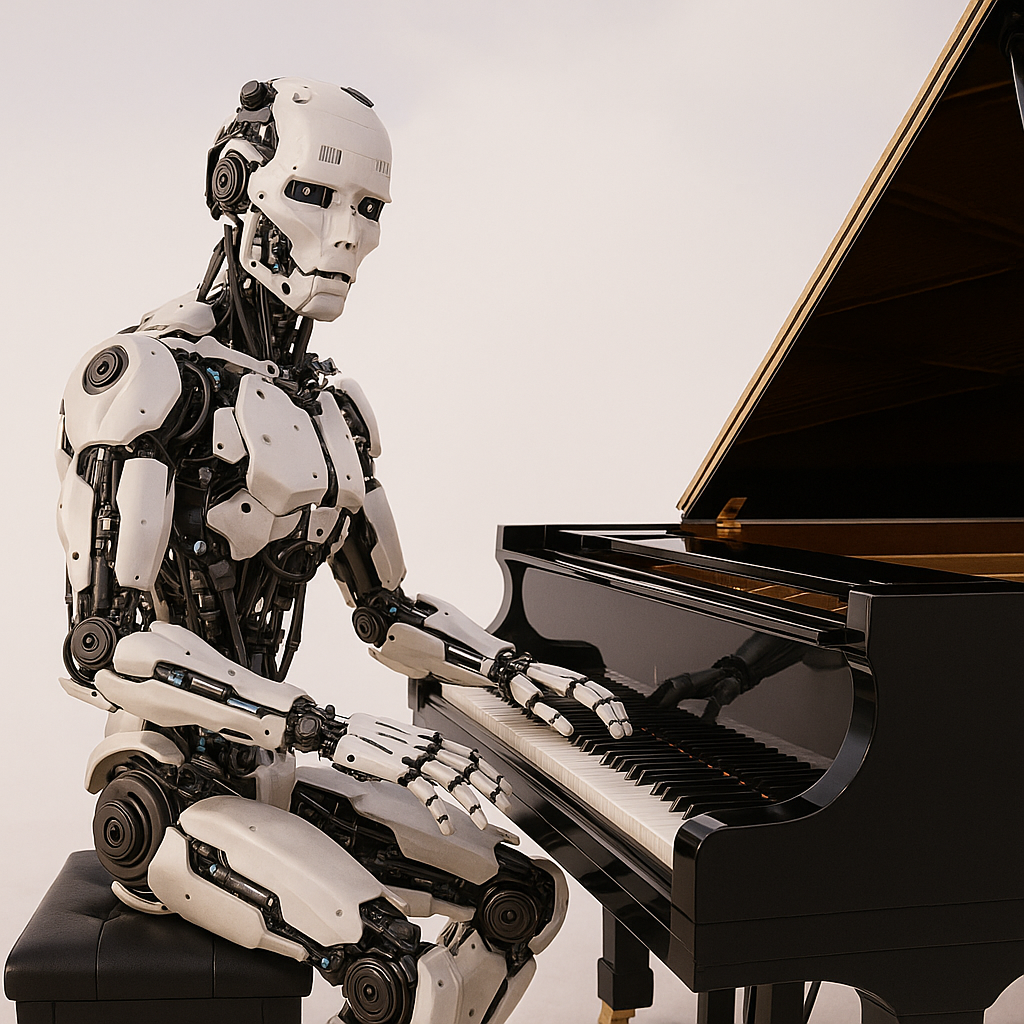
I came across a social media post the other day from a songwriter who’d done something quite interesting. He created an entire album using Suno – an AI-powered music generator that turns lyrics and prompts into fully produced songs. It's cutting-edge stuff, capable of creating surprisingly good music without necessarily having to be a musician.
He sent the album to two groups of people. One group wasn’t told how it was made, and the other was told it was created entirely by AI.
The first group loved it, but the second group, knowing it was AI, said it lacked soul. They liked the lyrics, but something about the music didn’t connect.
Same music, but very different reactions. In some ways, surprising, but I guess that’s how things are playing out with AI-generated content right now.
I also like to write lyrics that range from nostalgic 80s-inspired tracks to emotional cinematic ballads. I use Suno to bring them to life, turning my words into music in a way I never could before.
Some of the songs have received positive comments from listeners, especially when I’ve written personalised tracks that mean something to them. There’s even been a few tears when the lyrics have become a bit deep and meaningful.
But here’s the thing – if I lead with “this was made by AI,” the same songs are judged more harshly and people become more analytical. They start looking for flaws and there’s a bias.
And this is exactly what’s happening with CVs.
Polished but hollow and dubious
Just like AI music, AI-generated CVs appear professional. The right structure, keywords in all the right places, and flawless grammar. But they feel like a CV built from a flat-pack kit. Efficient, functional, but not compelling. Certainly not persuasive or memorable over and above the fact that they are usually recognisable as AI-created with lots of double-dashes, overuse of the word ‘elevates’, and usually written in the style of a US resume.
Additionally, there are lots of people creating AI-written CVs from job adverts that bear no resemblance to their actual experience. Employers are shortlisting more candidates only to find that none of them have the experience they claim to have on their CVs.
Achievements and examples are key
The solution for them is to focus more on achievements rather than tasks, and to prioritise CVs that give real-life examples (this is where our formula that includes case studies comes in).
There’s talk of AI-detection software, and some organisations are already asking job seekers to tick a box that declares “no AI was used in the making of this job application”.
Only this morning, a friend of mine messaged me after chatting with someone in-house at a big UK employer. Here’s what they said:
“Just had an interesting chat with a friend of mine who is an in-house recruiter. It was about how they’re getting identikit ChatGPT CVs through and the massive problems it’s causing them.”
Recruiters are increasingly seeing the same tone, same phrases and same structure – and it’s making it hard to tell who the real person behind the CV is. The backlash is definitely building.
It’s all about raw materials
The truth is that AI can assemble, but it can’t architect. That takes human input and the right raw materials. Think of a CV like a building – if your raw materials are sticks and mud, you get a hut. If your raw content is akin to sticks and mud, ChatGPT might make it sound nice, but it’s still your same underwhelming content.
Of course, you wouldn’t construct a modern home from sticks and mud. You would use structural steel, engineered timber, triple-glazed windows, smart climate systems, integrated solar roofing, acoustic insulation, and a bespoke architectural blueprint (I thank ChatGPT for that list).
It’s the same with a CV. You need a clear career objective, a strong personal brand, a value proposition, job market-aligned skills and strengths, lots of quantified achievements, a compelling career narrative, storytelling in the form of case studies (a big differentiator), optimised information architecture, social proof, strong aesthetics, and ATS optimisation. And our secret sauce – reverse-engineering the job description to align everything with the requirements of the role.
When you combine those ingredients, you’re not just building a document, you’re constructing a persuasive, strategic CV designed to convince an employer that you are worthy of further investigation.
The takeaway
AI is a brilliant assistant. I use it to create music, we use it in our operational processes (but strictly not for writing CVs), and it's a great research tool. But when it comes to content, without the right inputs, it can only regenerate what already exists, and in this case, that often means samey, average and underwhelming content.
AI may have raised the bar in some respects, but even when a CV looks slick and role-aligned, it rarely offers enough to make employers sit up and take notice.
We’re now in a three-tier job application system:
At the bottom are DIY CVs
Above that are DIY CVs enhanced by AI
And at the top are bespoke CVs – created through a robust career consultation and personal branding process, using the latest CV writing methodologies
AI can help build the house – but only if you bring the right materials.
Share this post:
.png)